I have a pretty severe allergy to sesame seeds (not oil) and tree nuts ( but not almonds, pistachios, pine nuts or peanuts).
Last night, we went out to dinner at a local Israeli place.
Anyone who has been to Israel knows that they basically fly planes over the entire country and consistently air drop sesame seeds on pretty much anything you can imagine. Pretzels, dates, etc. I think they make you walk through a pile of sesame seeds after you get your passport stamped when you enter the country.
And it's insidious because, for example, take something like hummus. Ground up chick peas, right?
Yes, but added in Tahina and boom...death trap.
As a result, I know to be VERY careful.
Asking is usually not a good idea because Israelis don't even realize how it is everywhere--the hummus example being the bets one.
But last night, I got caught...there was a beet salad that had a sauce which, I am pretty sure had a Tahina base.
Sure, you could say, "Jeremy, why take the risk?"
A fair and noble question, but let's ignore that for another time.
I got hit...hard. I was miserable. I thought I could fight through it. Water, claritin, benadryl.
Nothing. Finally, after a few hours of misery and a couple vomiting attacks, I stabbed myself with the Epi-Pen and...voila. All set.
Another valid question is: why didn't you do it sooner?
We can also ignore my own psychology on that one. The point is...it worked. Well.
So, today, I am grateful for the Epi-pen and its wonderful abilities.
Showing posts sorted by date for query oil. Sort by relevance Show all posts
Showing posts sorted by date for query oil. Sort by relevance Show all posts
Monday, December 11, 2017
Sunday, November 26, 2017
Gratitude Journal- Day 8- the people of the coffee supply chain
I am a big coffee drinker.
I like to say that I am a married, 44 year old man, who has a minivan; I don't drink. I don't smoke. I am vegan. There's not a lot of crazy in my life...so I go hard on the caffeine!
I am sitting here with a cup of homemade bulletproof coffee that I just made (which I really like) and I just took a moment to think about all of the people who made this moment possible.
The people who grew the beans, harvested them, roasted them, shipped them, packaged them, made the machines to put them in bags, made the French Press, produced the ghee and coconut oil, and the Vitamix I use to blend it all.
Not to mention, the people who made the mug from which I am drinking.
It's actually quite overwhelming that there were so many people who worked without even knowing that I exist and through their efforts and innovations, I can enjoy this cup of coffee that fuels the writing of this blog post.
Trying to comprehend all of that actually makes the coffee taste that much better.
So, today I am grateful for my personal coffee supply chain.
I like to say that I am a married, 44 year old man, who has a minivan; I don't drink. I don't smoke. I am vegan. There's not a lot of crazy in my life...so I go hard on the caffeine!
I am sitting here with a cup of homemade bulletproof coffee that I just made (which I really like) and I just took a moment to think about all of the people who made this moment possible.
The people who grew the beans, harvested them, roasted them, shipped them, packaged them, made the machines to put them in bags, made the French Press, produced the ghee and coconut oil, and the Vitamix I use to blend it all.
Not to mention, the people who made the mug from which I am drinking.
It's actually quite overwhelming that there were so many people who worked without even knowing that I exist and through their efforts and innovations, I can enjoy this cup of coffee that fuels the writing of this blog post.
Trying to comprehend all of that actually makes the coffee taste that much better.
So, today I am grateful for my personal coffee supply chain.
Friday, February 24, 2012
Money Changes Everything?

Image via Wikipedia
What happens when a quiet North Dakota town (pop. 1300) becomes the center of a 21st century oil boom?
That’s the story of Crude Independence about Stanley, ND.
It’s got everything in this 90 minute presentation. Neighbors who no longer see eye to eye. A bit of resentment, money going to your head, challenge of values.
Given the small size of the town, it’s a great microcosm of how newfound wealth can alter society.

Tuesday, September 27, 2011
A Glacial Perspective
“Everyone,” my host began, “has their own mythology of Alaska.”

As we drove out from Anchorage, past the town of Wasilla (yep, the hometown of Sarah Palin), I reflected on that.
Many states have images that are conjured up when you hear their names.
California. Florida. Texas. New York.
But, Alaska, probably because it’s so distant (I didn’t even know until this trip that it takes 3 hours to get there FROM SEATTLE), so big (and thus difficult to get our heads around), and somewhat the land of lore (think Klondike Gold Rush), definitely defies a unique stereotype…and that is what Steve meant, I believe.
Part of that mythology these days is Sarah Palin and, frankly, my non-scientific research says that most Alaskans could do without that.
But, part of that mythology is in the outdoors, roaming, going out and about…you vs. nature or, better yet, you AND nature.
Steve drove me up to the Knik River Lodge, owned by Peter, a Dutchman who has lived in Alaska for 24 years and done something quite special.
He’s combined a lodge experience with gourmet European cooking (he brings in a French chef) and a passion for the outdoors to create a unique experience that is about appreciating the state and its beauty.
With the help of Steve Richards, our pilot, we flew in a helicopter (my first time doing that) out to the Knik Glacier where I had a meeting with God.
It wasn’t on the calendar, He hadn’t sent an email, but He was there.
Ok, so I’m exaggerating, but if God is about feeling a sense of deeper connection to the earth and of giving you a better perspective into just how small you are in the grand scheme of things so you don’t get so full of yourself, then he was there.
The glacier is something like 6 miles wide, 26 miles long and no one knows how deep.
It’s intense, which I got to see for myself when Peter set up the ice climbing and I rappelled down (not too far) into a ravine…the bottom of which NO ONE has ever seen, but leads to an underground river.
Out there, on the ice, you think about your daily issues and your (relatively small) world and you are reminded..in a way to yet another city cannot do), how magnificent the world is and the awe-inspiring capabilities of nature.
Alaska is really a world unto itself in some ways. There’s no state income tax and no sales tax…of course, it’s easy to do that (and balance your state budget) when you have a $50 billion fund from oil royalties that serves as an endowment for the whole state.
In fact, EACH citizen (kids, too) gets an annual check for $2000 from the fund as a dividend.
All of this put some of Palin’s claims in perspective, by the way.
But, this isn’t about Palin and focusing on her does a disserve to the people here.
They are warm and hospitable. They have a great attidute and a beautiful climate and their state provides a unique opportunity to regain a perspective on LIFE that we all sometimes lose.
For some video of the glacier (here and here)

Monday, August 01, 2011
Going Solar...the Financial Argument

Image via Wikipedia
We used to have two glorious trees in our backyard. They shaded our southern exposure quite nicely and cooled the house.
Unfortunately, they were old and sick and we had to take them down.
It was sad, but it opened up a new world of possibilities...our new roof was now a candidate for solar panels.
Since watching An Inconvenient Truth and combined with my long-standing concerns around US dependence on foreign oil and my recent travels seeing both the positives and negatives of globalization, I've definitely become more of a "green" person.
Started composting, added insulation into my walls, compact fluorescents...and a few more things.
I'll admit, the economic argument wasn't always there, but I felt like, in a small way, I was doing something...and I was putting my money where my mouth was.
The Solar Investigation
So, I connected through a trusted resource, with the folks at Solar City who came over and reviewed my roof.
They gave me a proposal for leasing solar panels (I would post it, but it’s got my home address all over it) where they estimate a 25% reduction in my annual usage. They gave me a few different leasing proposals, but the question remained:
Was it going to be worth it?
I sent the proposal and the assumptions to a few friends who are better at Internal Rate of Return calculations than I am and the answers that came back were pretty much unanimous.
It's bordeline, and may not be worth it.
So, at the upfront investment of $6700, I wouldn't be coming out ahead.
Now, if you read Dan Ariely's book, Predictably Irrational (review here), you'll know that people don't always make purely rational decisions and this was to become one of those moments.
I'll admit, I'm doing a bit of financial hocus-pocus wizardry on myself, but here's how I came up with the justification to do it.
I figured I was willing to spend about $2,000 on the following elements to the deal.
- I'd FEEL like I was doing something for the environment. I'm convinced that our current model is unsustainable and I'm willing to pay something above and beyond to do something about it.
- I'm always willing to pay for the feeling and the self-perception of early adopter. It's difficult to explain, but those of us who are, know what I am talking about. In fact, talking to one friend who is one also, he said, "yes, the early adopter rush is definitely worth something."
- As a technophile, frankly, I am curious if/how it will work. I constantly experiment with new technologies and realize that, not always, does it work in your favor, but the education itself is worth something. I'm willing to pay for that.
- And the one of which I am most proud...since I work at home, I now feel comfortable promoting Never Stop Marketing as a "green business." After all, world HQ is powered by solar, right? (Bonsu if I can swing this as a tax deduction...still investigating).
So, those 4 elements are worth about $2000 to me.
Then, I take that out of the total cost and, assuming the numbers are close to accurate, the system does make economic sense.
Obviously, I'll keep blogging about this.
Should you want to get/investigate your own system, let me know, so I can refer you. We'll both benefit financially..thereby improving my (and your) ROI.

BTW, feel free to talk me out of it…I’m still in the no-penalty cancellation period!

Thursday, March 31, 2011
Moscow-Now, I get the whole “Russian Winter” Thing…

As soon as I walked out of the airport into the February cold (it was 3 degrees Fahrenheit), I said, “Ok, now I understand why Napoleon and Hitler didn’t make it.”
Man, it was BRUTAL!!
After 8 minutes of being outside of the Metro (which is GORGEOUS because during the 30s and 40s, all of the wealth was appropriated from the aristocracy to create the “people’s subway), on our way to Red Square, I said, “ok, I’ve had enough, I’m declaring victory.”
I had on thermal underwear and 4 layers of clothing. I couldn’t feel my face. I only had about 2 hours to do my sightseeing, so along with my dad and sister (who joined me on this trip), I went to Red Square, saw the Kremlin, Lenin’s Tomb, St. Basil’s Church, the GUND department store (which, I am told, was sort of the bastion of communism, but now is a display of capitalist largesse—the irony wasn’t lost on me), and rode the Metro.
Oh, we also saw the building of the Bolshoi ballet from across the street.

It’s clear that there is a “westerner” tax on pretty much everything. A 10 minute cab ride is $30 (and that’s after you negotiate), for example.
There’s also apparently a set of “oligarchs” who are able to buy some sort of blue light to affix to the top of their automobiles. Once they do that, it’s like an EZ-Pass for Traffic. People are supposed to move out of their way and recently, someone didn’t and was killed by a speeding car.
And it extends down the chain. I didn’t see any, but heard about the “pazahloosta” sticks which some low-level policemen employ. Basically, in the middle of traffic, they pull your car over and won’t release you until you’ve paid them off with a bribe.
That being said, a lot of stuff does seem to work pretty well. The metro, of course. Traffic, while heavy, isn’t nearly as chaotic as some places, and, well, let’s just say that they have mastered the art of snow removal.
I suppose necessity is the mother of invention in this respect and, apparently, there are conveyor belts to extricate the snow from the city to the surrounding areas.

Speaking of survival, the Darwinian question which arose in my head was: “how the hell did the Russians survive their own winter in the days before heating, thinsulate, and gore-tex? I mean, I was cold most of the time and I was barely outside at all.
Maybe this partially explains the expertise with sauna maintenance.
I love saunas. The hotter, the better. I had my bachelor party at the Russian Bath House on 10th St. in Manhattan and I know the difference between a great sauna and a not so great sauna.
During the month of February, I was in saunas in Sao Paolo, Bogota, Munich, and Moscow and let’s just say, in this respect, the Europeans dominate. They really know what they are doing. (I know, I need to go to Finland, but that’s another day.)
Speaking of the sauna, I met a Russian guy who now lives in Seattle and works for Boeing and he helped put into words some of my observations.
Moscow is a city that is struggling for its identity.
On the one hand, you have the oligarchs, the people who make a TON of money in oil, natural gas, and diamonds (in the East), but spend it here. It’s the financial and commercial capital. Some of the clubs have tables that go for $10k a night. It’s crazy. The desire for the accoutrements of wealth, the name brand designers is evident. There are is also some really beautiful architecture and the wide boulevards were appealing to me.
On the flip side, there’s plenty of the Soviet-style utilitarian architecture. There’s a LOT of corruption and there’s concern about a potential political upheaval (and that fears drives the tolerance for the Putin heavy-handed regime which, for example, won’t allow Blackberry Messenger to work in the country because the information can’t be read by surveillance technologies—or so I’m told).
From the marketing perspective, customer service (aside from the high-end places) isn’t really a core competency. There’s a gruffness to the approach and it’s always so comfortable.
I was told MANY times that “Russians don’t smile.” The combination of the hardships of life here, the cold, and uncertainty make people not only drink vodka, but also there’s some sort of “Russian soul” that says “you don’t show emotion.”
Interestingly enough, I remember when I filled out the visa (which was, BY FAR, the most difficult I’ve encountered), that there was a stern warning that your visa picture could NOT be of you smiling. You had to be straight-faced. Mine was borderline, but I made it.
Speaking of the visa, you had to tell them what day you were arriving and departing from the country. If you got the visa and your travel plans changed, you have to reapply. Crazy.
All that being said, I found that, in many cases, especially among younger Russians (who often speak English well and much better than older Russians), that this “no smiling” wasn’t the case. In my presentation at Microsoft (the reason for my trip), I saw many people laughing and smiling (or maybe I’m just really entertaining.)
I could go on (and might in a future post, who knows?) and there’s obviously a lot here, but I guess the one thing that kept popping into my head, given that I came of age during the Cold War was “holy goodness, I’m in Moscow!”
That and “I wonder if I get "extra hard core” bonus points for coming here in February?”
Sunday, February 27, 2011
Better Place and the Peace Process…
As I watched the video at the Better Place facility in Israel, I found myself thinking:
“if this works, it completely changes the face of the Middle East and the Arab-Israeli conflict.”
First, some assumptions.
%5B3%5D.jpg "Project Better Place Visitors Center (4)")
- for the most part, the Arab-Israeli conflict is kept alive by the fact that the West has to care about it in order to keep the flow of oil alive
- were it not for oil, people really wouldn’t care about the Middle East
So, if Better Place is able to change the world dynamic from one that cares about Arab oil to one that doesn’t really care, the whole future of the region takes a massive turn.
From a strategic defense perspective, this initiative could be the most important thing to occur in the history of the state of Israel.
No, I’m not exaggerating.

Friday, February 25, 2011
To a Better Place…
It’s not everyday that you get to the see the future.
But my visit to the Better Place Visitor facility was one of those days.
BetterPlace is a vision of allowing us to have the freedom of our cars with zero reliance or dependency on oil or gas.
What is happening in Israel in this respect is truly remarkable.
Imagine this…
Your car charges overnight in your garage/front yard.
In the morning, you have 160km/100miles worth of driving available to you on that charge (which is good enough for most people everyday.)
When you get to work (or wherever your destination is), you can plug in again and keep the battery full.
For much longer rides, when you don’t have time to recharge (a full charge is about 6 hours), you will pull into an automated switching stations where, in about 90 seconds, they remove the battery and replace it with a new one (video here).

What’s more, the car is connected to a smart system so that, it can tell you which battery replacement stations have the shortest wait time in them.
But, for the most part, you never really need that.
And you NEVER, ever have to fill up with gas.
To make this a reality, they are building an entire infrastructure of 
Instead of paying for gas or electricity, you pay for the amount of miles/kilometers you drive.
Kind of like buying your cell phone and then paying for minutes…but only for the minutes you actually use.
The cars don’t need oil changes or maintenance in the conventional sense.

All of this is the feature of the car…but the way they sell it, just brilliant.
It’s a story about the environment, about health, about security and how this car company frees us from all of that. They are truly selling the movement and showing why and how this is not only necessary, but feasible.
And the cars themselves?
I test drove one and the first thing I noticed…no noise. So quiet. Handled well, accelerated beautifully. (see the video)
I’m a believer.
Not just in the car, but how this car can begin to turn the tide of global warming. To end our dependence and subservience to despotic oil regimes.
Just awesome.
For more:
Here’s my 7 minute video of a test drive of the car.
Here’s a bit on how the battery switching process (when needed) works.
Here’s the video explaining the charging process.

Wednesday, December 01, 2010
How much should you control creativity?

On the one hand, I want to encourage my kids’ creativity.
I don’t know many 5 and 6 year olds who know how to use Canola Oil, baking powder, sugar, and salt to make perfect cookies with NO adult supervision.
I’m at the point now where I can take a nap (while Nadia takes one too) and leave Paco and Tonka on their own.
More often than not, I wake up to some culinary concoction having been put together in the kitchen.
They cracked the eggs, put in the vanilla extract, mixed the batter…everything.

Truly remarkable.
On the other hand, they tend to leave a mess and use a ton of confectionary items (choc. chips, M&Ms, etc.) The floor is, shall we say, not the cleanest.
And, it’s up to me to clean it up.
I’ve told them that “clean up is part of baking,” but that doesn’t always work.
What’s the right balance?
Friday, March 26, 2010
Blood for Water?

Image via Wikipedia
The mantra used to be “no blood for oil,” but what about “blood for water?”
In the very depressing moving “Blue Gold: World Water Wars,” the filmmakers explain the global impact of not only the privatization of water resources managed by companies like Suez and Veolia, but equally important, the ecological impact of taking water from one place and moving it to another place.
This, apparently, has dramatic impacts on watersheds, water tables, and the natural environment. If you think about it, this makes sense. The problem is, most of us don’t think about it.
Bottled water, I am now more convinced than ever, is one of the great hoaxes of all time (I wouldn’t call it marketing, since it’s not really based in fact).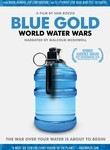
In any movie like this, the point is to shock you and get you to act. Plus, it’s easy to dismiss it as an anti-capitalist screed, but given how efficient our production/technology systems are, the underlying thesis doesn’t seem so far fetched.
I highly recommend you watch this to, at a minimum, educate yourself about something we all need.
If even half of what they say is accurate, a water war is not that far-fetched.
Updated: an article that shows this isn’t fantasy.

Monday, December 28, 2009
Kosher Ham and Jewdar…
Funny post from my friend David Berkowitz’s blog…
Originally published in MediaPost's Social Media Insider
It's one of the most critical, controversial issues of our time. It's been the subject of more columns than MySpace. Even the Talmud, the great repository of Jewish debate and wisdom, is at a loss to comment on it. Yes, in what's undoubtedly the greatest miracle since the time the Maccabees kept their temple menorah burning with a small jar of oil, the gift of Jewdar continues to shed light on how marketers are targeting their ads.
I've wanted to return to this for months, ever since Jeremy Bloom reached out to me in August about his business KosherHam.com, a humorous T-shirt site that claims, "Wearing anything else just isn't kosher." He even noted that my new BFF Perez Hilton has been spotted in his gear.
I was intrigued when Bloom said that he's been honing his Jewdar - in this context, the act of targeting Jews through advertising, specifically on Facebook - and that he'd be willing to share all his secrets with me. He wrote, "I am constantly behaviorally targeting different demos, but the most receptive audiences with some of the highest click-through rates and lowest CPMs seem to be Jews." He tests religiously, trying different subject lines, ad copy, targeting, and models and T-shirts in the photos.
He's able to reach Jews largely through the keywords field in Facebook's self-service ads that target users based on their interests. Facebook won't target users by religion specifically, but if they list "Jewish" or Jews" as interests, they're fair game. Bloom further targets users in major cities with large Jewish populations. This will inherently mean some non-Jews see the ads -- but hey, they're welcome to buy shirts too.
So what keywords does Bloom use to find Jews? The eclectic roster includes: Jew, Jewish, Hebrew, Israel, Hillel, Sigma Alpha Mu, Zeta Beta Tau, Annie Hall, Brooklyn, bagels, deli, Chinese food, Matisyahu, Phish, jam bands, being Jewish, Curb Your Enthusiasm, Adam Sandler, Seth Rogen, Seinfeld, Hebrew Hammer, Heeb Magazine, and Fiddler on the Roof. If you don't know what some of these mean or what they have to do with Judaism, you're probably out of the target demographic.
After perusing the list, I wondered how some of these would do head to head. Bloom indulged me and ran some trials in four different brackets: City, Comedian, Cuisine, and Music. Bids were set at 34 cents CPM. The top performing ads were those with the highest click-through rate (CTR) and lowest cost-per-click (CPC). And the winners are...
Bracket 1
City: New York vs. Los Angeles
Subject Lines: NY Jews Love Kosherham, LA Jews Love Kosherham
Winner: LA gets the Oscar, with 18% CTR and 16 cents CPC, coasting past NY's 12% CTR and 23 cents CPC.
Bracket 2
Comedian: Seinfeld vs. Woody Allen
Subject Lines: Seinfeld Fans Love Us, Woody Allen Fans Love Us
Winner: Woody Allen kvetches up the clicks, with 33% CTR and 8 cents CPC, while Seinfeld's 13% CTR and 21 cents CPC showed signs of shrinkage.
Bracket 3
Cuisine: Bagels vs. Deli
Subject Lines: Shirts for Bagel Fanatics, Shirts for Deli Fanatics
Winner: Bagels win by a shmear, with 13% CTR and 19 cents CPC, overstuffing Deli's tournament-worst 6% CTR and 44 cents CPC.
Bracket 4
Music: Phish vs. Matisyahu
Subject Lines: Shirts for Phish Fans, Shirts for Matisyahu Fans
Winner: Phish hoists up its tournament-best 55% and 5 cent CPC, out-jamming Matisyahu's 27% CTR and 10 cent CPC.
I asked Bloom if he could explain why Phish has so much mazel in hooking Phacebook -- er, Facebook -- users. He cited a number of reasons: the right age demographic, the loyal Phish fan base of liberal Jews, and the shared interests in certain botanical exploits reflected in Kosher Ham's apparel.
More importantly, I asked about conversion rates. It's great to get a lot of clicks, but do Jews on Facebook convert? (It's just getting too easy, sorry.) He says he was able to track a couple sales from the Phish ads directly, and he also notices spikes when running ads from people who go directly to KosherHam.com or search for it. With search, Google has performed especially well, as has AIM Search -- Boom thinks people find shirts they like and share them via instant message.
So it turns out Jewdar is a little easier to understand than the Zohar, Maimonedes' "Guide to the Perplexed," and my fourth-grade Hebrew teacher's accent. And it's not foolproof, as there are probably a few Woody Allen fans in New York who didn't go to a Jewish sleepaway camp. But if a guy can start a site called KosherHam and sell T-shirts about getting the munchies for unleavened bread to Jewish Phish fans on Facebook, I've got to think he's on to something.
Post was written while listening to...Elton John, Sorry Seems to Be the Hardest Word
Monday, December 14, 2009
Iceberg Theory of Change
Longtime blog readers will remember this, but documenting it for posterity…
A few years ago, I saw a documentary about oil rigs in the North Atlantic. The biggest enemy of oil rigs are icebergs. In a confrontation between the two, the iceberg is going to win.
So, oil rigs have an elaborate anti-iceberg defense mechanism that involves radars and tugboats. Once they detect an iceberg coming, they send out a tugboat interceptor, which has three options. One is to try and blow the iceberg to smithereens.
The other two (literally lassoing the iceberg or throwing the engines in reverse in front of the iceberg to create wake) are designed to alter the course of the iceberg by a miniscule amount. However, at a distance of 300 miles, a deviation of a few degrees or so will make the iceberg miss the rig by 200 miles or something ridiculous like that (the mathematicians out there can give you the exact numbers, but you get the idea.)
So, what’s the point? Well, the sooner you see the need for change and the sooner you make the change, the easier it is going to be. It’s easier to change the course of an iceberg by 1 degree than 30 degrees, which is what you’d need to do as it gets closer to you.
Sunday, August 30, 2009
No Blood For Oil? How about Water?
First it was phosphorus, now it is water.
A fascinating article about what current trends in consumption mean for us and future generations.
Thoughts?
Will ingenuity solve this or are we headed to catastrophe?
Wednesday, May 13, 2009
Getting out of the echo chamber...
 Image via Wikipedia
Suicide prevention is not one of them.
It's not that I don't think it's important, it's just that it's not top of mind.
A few weeks ago, blogreader/friend Aaron reached out to me and asked if I'd like to participate in a blue-ribbon workshop sponsored by a number of orgs on how to use social media to help further the cause of suicide prevention.
I had mixed emotions. On the one hand, it is certainly a worthwhile discussion, on the flip side, it's kind of outside of my "wheelhouse" and I wasn't sure that it would benefit the business (and right now, pro-bono time is limited...sorry, I'm a start-up.)
I thought I would have something to add and Aaron also suggested (rightly) that it would be a good networking event.
Sure, during the introductions I encouraged those Tweeters in the group to agree on a hashtag...and then during lunch, I gave an impromptu lesson on Twitter for the audience, but the real value?
Getting outside of my comfort zone.
Meeting a whole range of folks who aren't digerati, aren't marketers, aren't business folks, but who have a serious problem and are looking for serious answers on how to use something that I'm familiar with to save some of the 33,000 people who die each year because of suicide.
I heard a heart-wrenching stories from Debbie Johnston, whose 15 year old son took his own life as a result of "bully-cide." She's leading the charge for a new law in Florida, called Jeff's law to untie the hands of school officials to intervene earlier and faster through her organization, Thursday's Child.
I think it's really important to step away from your natural community when you can to meet with others who don't live and breathe the same air that you do...it opens horizons and helps you challenge some assumptions.
Thank you, Aaron for endorsing me to be a member of this workgroup and to all of the folks who used the #spsum tag. Made for an even more interesting day.
![Reblog this post [with Zemanta]](http://img.zemanta.com/reblog_e.png?x-id=14bc36c4-4739-44e6-b4df-573b78ac68c8)
Sunday, October 12, 2008
Drill, Baby, Drill..
 Image by NewsHour via FlickrThe refrain from St. Paul/ RNC convention has been haunting me recently.
 It's not that I think we shouldn't drill in Alaska. We probably should. It's what the chant symbolizes.
And it's not a callous disregard for the environment.
It's the propensity for people to prefer short-term quick fixes to long-term strategic solutions.
Yes, if we drill, oil/gas prices will probably fall...which, honestly, is NOT what we want. At higher prices, entrepreneurs see the incentive to pursue alternative energy.
That's what we need.
When I hear "drill, baby, drill," I hear people who say 'let's just solve this problem for today...not for tomorrow."
That's not what we need.
Got a forward from Josh with a Tom Friedman article that does a really good job of explaining it.
![Reblog this post [with Zemanta]](http://img.zemanta.com/reblog_e.png?x-id=97679e75-2b16-44ea-a6eb-e34889e27230)
Sunday, September 14, 2008
Raise the price of water…
Image by kevindooley via Flickr
The winning “World’s Best Presentations” kawasaki presentation was entitled
It’s a powerful statement of how safe drinking water is become increasingly scarce.
I saw it and thought “ok, what can I do?”
Then, I was reminded of a review I saw in Popular Mechanics about a grey-water toilet system called Aqus (it takes the water you use in your sink and repurposes it for your toilet)


I thought “great, I’ll get one.”
Then, I saw the price tag $279, which is $10 more than I spent on water for my whole house for the first 7 months of the year.
It’s hard to think that a system on one toilet is going to reduce water costs by 50%. It’s not.
So, the question becomes: how much is saving water for others worth it to me?
Crass, but true.
On the other hand, if the price of water goes up (like oil/gas), well, at some point, it’s worth it.
The free market strikes again..
Related articles by Zemanta
![Reblog this post [with Zemanta]](http://img.zemanta.com/reblog_a.png?x-id=a4b65bf0-9b34-4b6a-802f-a70e5991b2fa) >
>Wednesday, September 10, 2008
Confessions of an Economic Hitman
Confessions of an Economic Hit Man
While the author clearly has a bit of an axe to grind and the need to assuage some guilt, that doesn’t mean he’s making the story up.
His basic thesis is that US foreign policy is designed to identify areas of the world where influence is needed, convince those countries through manipulated data to accept loans which can never be repaid, thereby indebting the country forever…where payback comes in non-economic form.
It’s humbling and if it’s true, it’s a bit demoralizing because it destroys the perception of America as a country that seeks to bring democracy, freedom, and prosperity to others around the world. According to John Perkins, it’s not about them, it’s only about us.

While the book probably could have been 20% shorter and was short on “ok, what do we do now?” it certainly was a compelling story.
What he failed to mention, however, is the theory of alternative universe. It’s easy to be critical of the US in a vacuum, but I don’t think the words “Soviet Union” appeared all that much, if at all.
Regardless, I’ll accept this was his life and it was true. It sheds some light on US behavior and will make you think. I won’t accept that there aren’t other factors at play, but certainly the images he paints of how our actions in the US inadvertently (or otherwise) have a dramatic effect on others can’t be minimized.
Of course, we’re all at fault. It’s like drugs and oil, if there weren’t US-based demand, many of the problems wouldn’t exist, but that’s a topic for another post.
Call out to Josh Halpern for the suggestion of the book.
Image by fmc.nikon.d40 via Flickr
Wednesday, September 03, 2008

Monday, August 11, 2008
End Oil Dependence in 10 words
Ok, not quite, but the Minifesto community efforts at BetterPlace - Ten Words is worth investigating.
Better Place is a noble effort to make electric cars. They are using Israel and Denmark as proving grounds.
It's fascinating and possible. Check it out. This is going to be big, IMHO.
Better Place is a noble effort to make electric cars. They are using Israel and Denmark as proving grounds.
It's fascinating and possible. Check it out. This is going to be big, IMHO.
Blogged with the Flock Browser
End Oil Dependence in 10 words
Ok, not quite, but the Minifesto community efforts at BetterPlace - Ten Words is worth investigating.
Better Place is a noble effort to make electric cars. They are using Israel and Denmark as proving grounds.
It's fascinating and possible. Check it out. This is going to be big, IMHO.
Better Place is a noble effort to make electric cars. They are using Israel and Denmark as proving grounds.
It's fascinating and possible. Check it out. This is going to be big, IMHO.
Blogged with the Flock Browser
Subscribe to:
Posts (Atom)
 Subscribe to RSS Feed